AI vs Manual Answer Sheet Evaluation: What Actually Changes for Teachers
Teachers in India have been checking answer sheets the same way for decades. Red pen. Marking scheme. One paper at a time.
AI answer sheet evaluation does the same job differently. Not better at everything. Not worse at everything. Different.
This post is a straight comparison. No sales pitch. Just what changes and what stays the same when AI enters the evaluation process.
Time
This is the biggest difference.
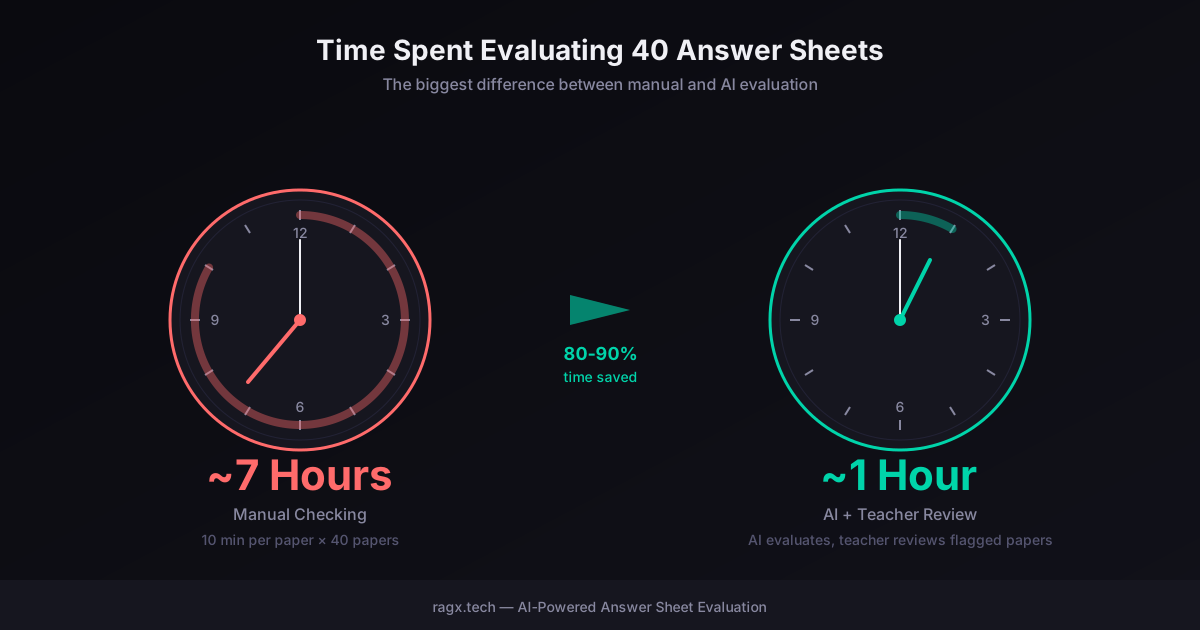
Manual: A teacher checking 40 answer sheets at 10 minutes each spends roughly 7 hours. A full school day. For a single set of papers from one class. Teachers with multiple sections and subjects can spend 20-30 hours per exam cycle on checking alone.
AI: The same 40 answer sheets take 15-30 minutes. The AI reads every answer, compares against the marking scheme, awards marks, and generates feedback. The teacher reviews the output and makes adjustments where needed. Total time including review: about 1-2 hours.
That is a reduction of roughly 80-90% in time spent.
Consistency
Manual: The first paper you check in a session gets your full attention. Paper number 35 gets a tired version of you. Research confirms this. Evaluator fatigue leads to inconsistent marking. Two identical answers checked at different points in a session can receive different marks. When multiple teachers evaluate the same exam, the variation increases further.
AI: Every paper gets the same standard applied in the same way. Paper number 1 and paper number 200 are evaluated identically against the marking scheme. There is no fatigue effect. No mood effect. No handwriting bias.
This does not mean AI is always right. It means AI is always consistent. If the marking scheme is correctly configured, every answer gets the same treatment.
Accuracy
This one is more nuanced.
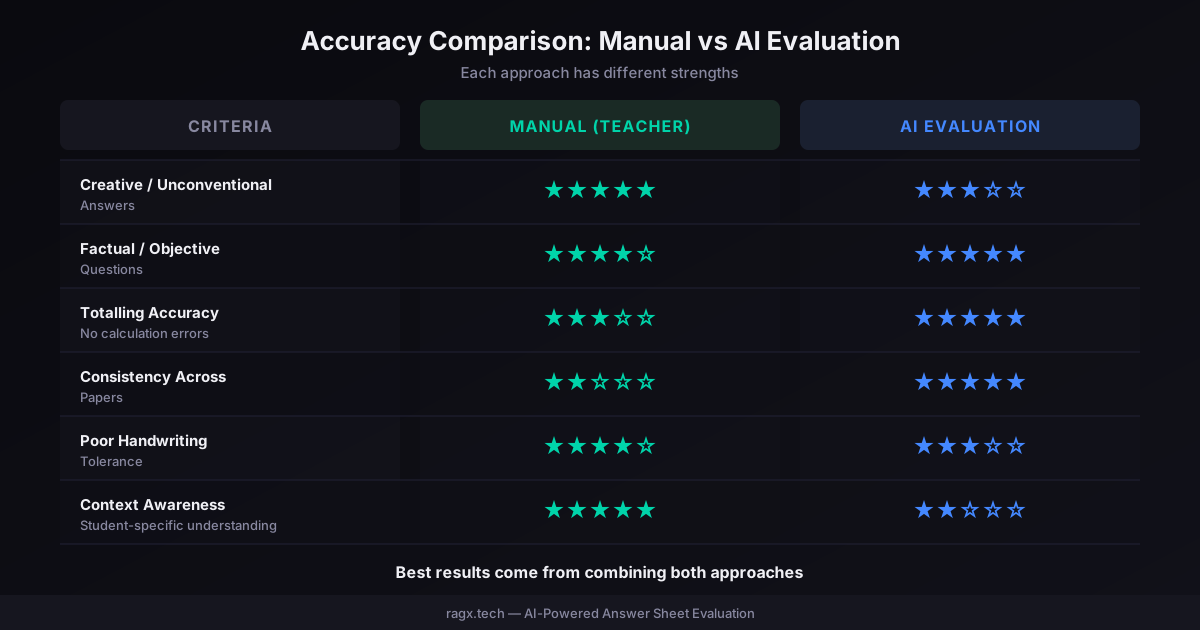
Manual (strengths): Human teachers excel at evaluating creative answers, understanding unusual reasoning, recognising valid alternative approaches, and reading context that an AI might miss. A teacher who knows their students can interpret an unclear answer through the lens of what was taught in class.
Manual (weaknesses): Totalling errors. Missed questions. Inconsistent application of the marking scheme across papers. These are not judgment failures. They are fatigue failures. And they happen at scale.
AI (strengths): Zero totalling errors. No missed questions. Consistent marking scheme application. Strong at factual evaluation, step-based marking, and identifying whether key concepts are present in an answer.
AI (weaknesses): Can struggle with highly creative or unconventional answers. May not catch nuance in literary analysis or philosophical arguments. OCR accuracy drops with very poor handwriting or uncommon scripts.
The practical takeaway: AI is more accurate than manual checking for routine, factual questions. Manual checking is more accurate for subjective, creative questions. The best results come from combining both.
Feedback quality
Manual: Most teachers write brief comments on answer sheets. "Good." "Incomplete." "Revise." They want to write more. They do not have time. When you are checking 150 papers, detailed personalised feedback for each student is not realistic.
AI: Generates per-question feedback for every student. What was correct. What was missing. What the model answer expected. Specific suggestions for improvement. Every student gets the same depth of feedback.
This is where AI grading has an advantage that goes beyond time savings. The feedback is detailed enough to actually help students improve. Instead of a mark and a vague comment, students get a breakdown of exactly where they went wrong.
For parents, this changes the conversation. Instead of "your child scored 62%" it becomes "your child understands the concepts in chapters 1-3 well but needs to work on chemical equations and diagram labelling."
Cost
Manual: The direct cost is teacher time. In board exam scenarios, schools and boards pay evaluators per paper. CBSE pays approximately Rs 20-25 per answer sheet for evaluation. Multiply that by lakhs of papers and the cost is substantial. Beyond direct payment, there is the opportunity cost of teacher time that could be spent on instruction.
AI: Pricing varies by platform. Most AI grading tools charge Rs 1-5 per answer sheet. Some offer monthly subscriptions. The cost is typically 70-90% lower than manual evaluation at scale.
For coaching centres running weekly tests for 500+ students, the math is straightforward. Manual checking requires hiring evaluators or overburdening existing teachers. AI handles the volume at a fraction of the cost.
What stays the same
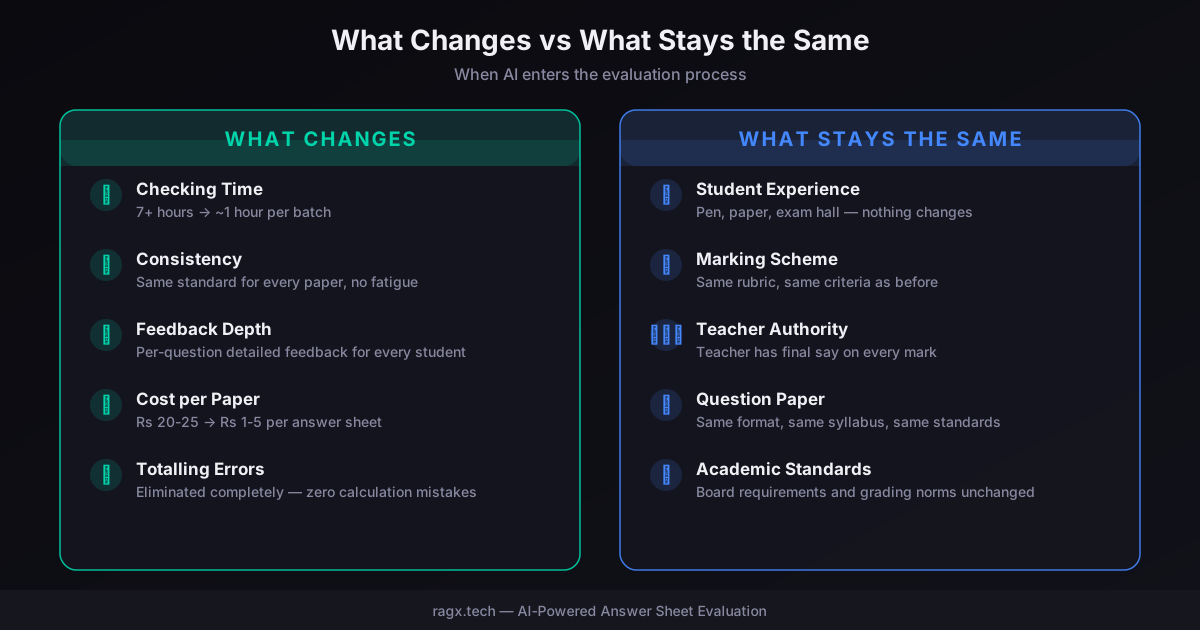
The student's experience does not change. They still write answers on paper with a pen. The exam hall, the question paper, the time limit: all identical.
The marking scheme does not change. AI follows the same rubric that a human evaluator would use. The teacher defines the criteria. The AI applies them.
The teacher's authority does not change. AI suggests marks. The teacher has final say. Any paper can be reviewed, adjusted, or overridden.
The hybrid model
The future is not "AI or manual." It is both.
AI handles the first pass. Reads every answer. Awards marks. Generates feedback. Flags borderline cases and unusual answers for human review.
The teacher handles the second pass. Reviews flagged papers. Adjusts marks where AI judgment was insufficient. Adds personal insights. Makes the final call.
This model is faster than fully manual checking. More accurate than either AI or humans alone. And it gives teachers time back without taking away their control.
CBSE is already moving in this direction with On-Screen Marking. The next step is AI-assisted evaluation within that digital framework.
The question for schools is not whether this will happen. It is whether they will adopt it early or wait until it becomes mandatory.
Follow Saraswati AI on LinkedIn to stay updated on AI-powered evaluation tools for Indian schools.