150 Million Red Pens: The Hidden Cost of Manual Grading in India
150 million red pens are consumed in India every year.
That number sounds like a stationery fact. Something you would find in an industry report about the writing instruments market. It is not.
Behind every red pen is a teacher. Behind every teacher is a stack of answer sheets. And behind every stack is time. Hours and hours of time that nobody talks about.
Let's do the math.
The math behind the red pens
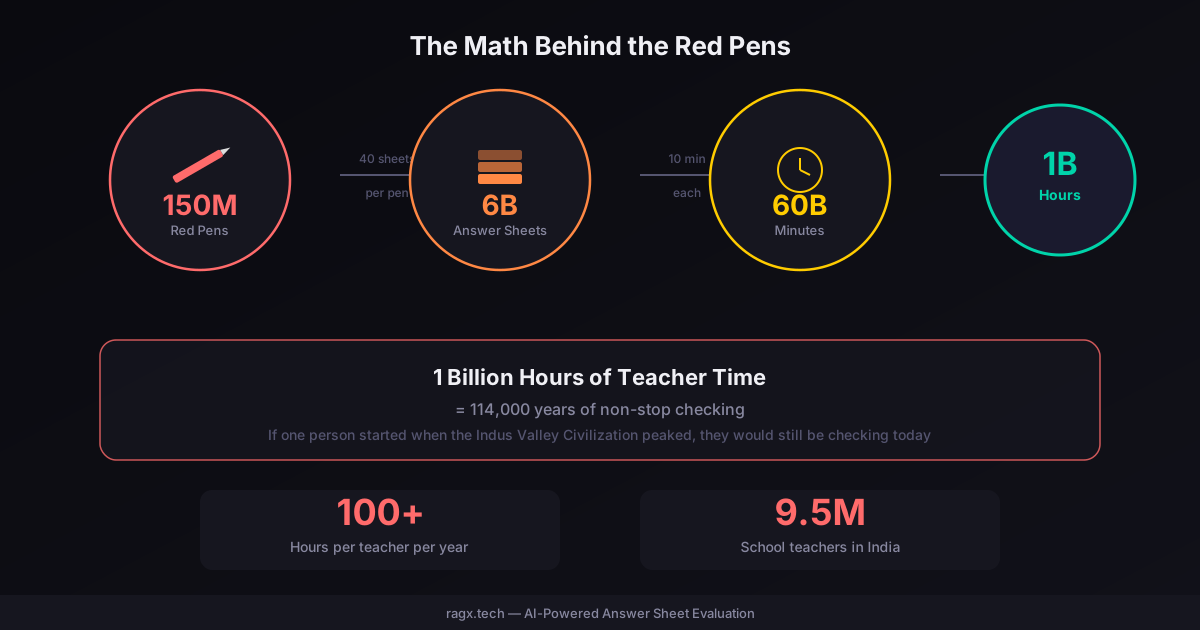
A single red pen can check roughly 40 answer sheets before the ink runs out. Some teachers report more, some less. 40 is a reasonable average.
150 million red pens divided by 40 answer sheets per pen: 6 billion answer sheets checked by hand in India every year.
Each answer sheet takes about 8 to 12 minutes to check properly. Not just marking right and wrong, but reading the answers, comparing against the marking scheme, writing comments, totalling marks, and moving to the next one. Call it 10 minutes on average.
6 billion answer sheets at 10 minutes each: 60 billion minutes. Or 1 billion hours.
One billion hours of teacher time. Every year.
What 1 billion hours actually looks like
Numbers that large stop meaning anything. So let's make it concrete.
1 billion hours is 114,000 years of non-stop checking. If a single person started checking answer sheets when the Indus Valley Civilization was at its peak, they would still be checking today.
India has roughly 9.5 million school teachers. That means on average, each teacher spends over 100 hours per year on answer sheet checking alone. That is two and a half full work weeks. Just checking.
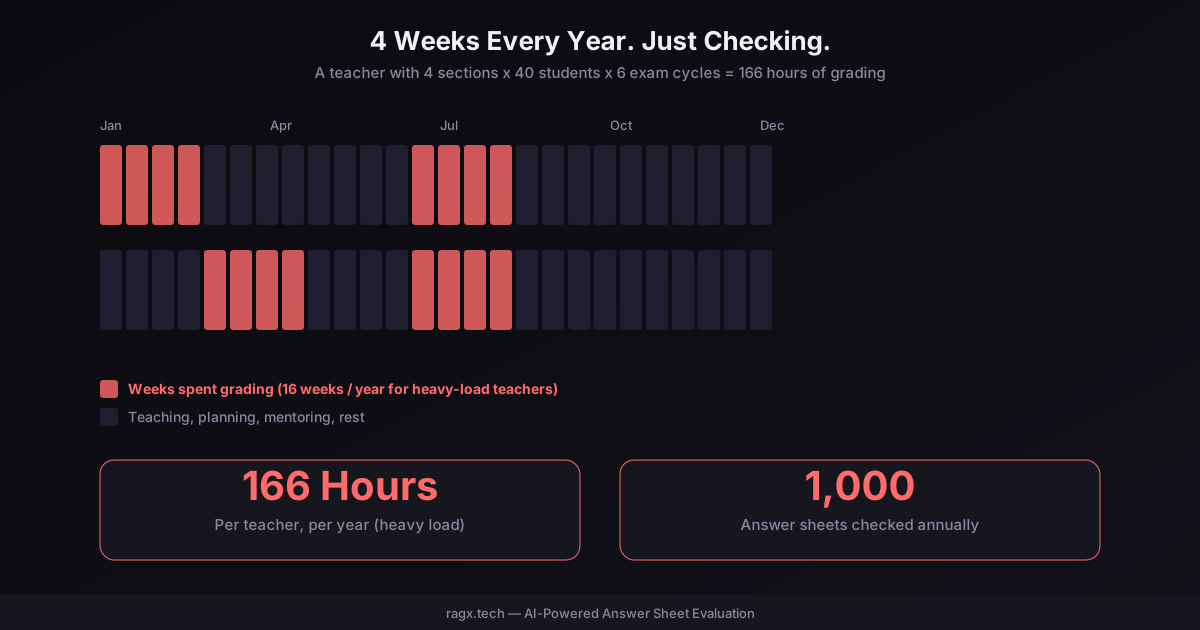
For teachers in exam-heavy schools and coaching centres, the real number is much higher. A teacher handling four sections of 40 students each, with 6 exam cycles a year, checks close to 1,000 answer sheets annually. At 10 minutes per sheet, that is 166 hours. Over four full work weeks.
Four weeks of the year spent doing one repetitive task.
What teachers are NOT doing during those hours
This is the part that matters.
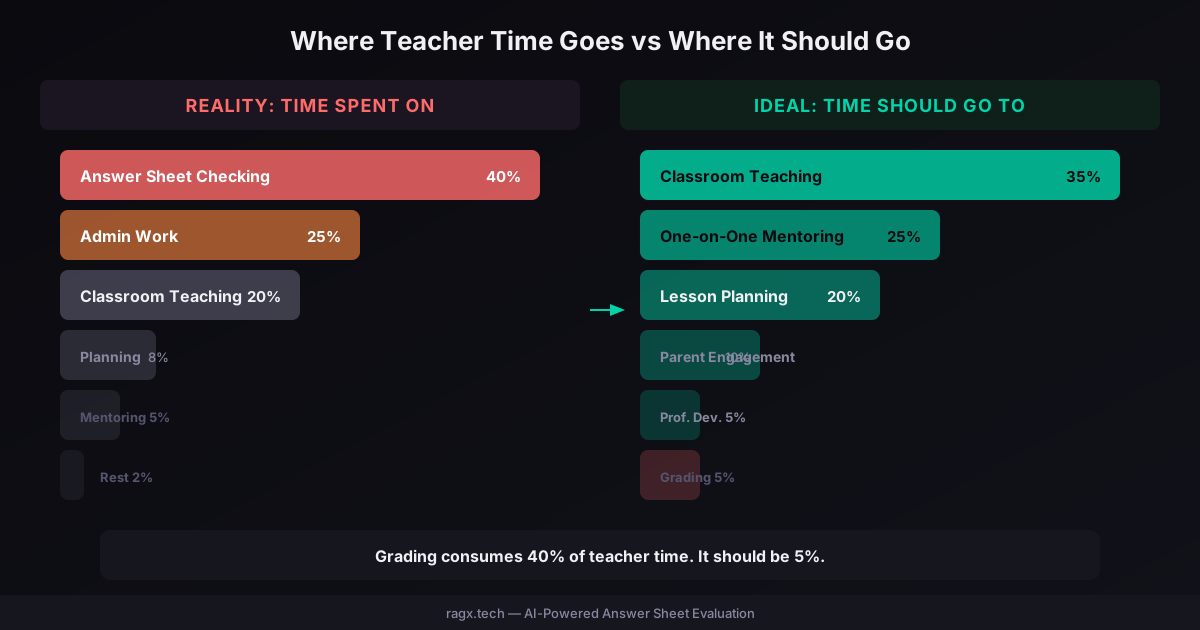
When a teacher is checking answer sheets, they are not doing anything else. The list of things that get pushed aside:
Lesson planning. The creative work of designing classes that are actually engaging takes time. Most teachers do it in whatever gaps they can find. During exam season, those gaps disappear.
One-on-one mentoring. The student who is falling behind in class needs individual attention. The student who is ahead needs more challenging work. Both need conversations that require time. Time that answer sheet checking consumes.
Parent engagement. Parents want to know how their child is doing. Detailed, specific feedback takes effort. When a teacher is buried in answer sheets, parent communication becomes a quick "doing fine" or a generic note.
Professional development. Learning new teaching methods, attending workshops, reading about their subject. All of it takes a backseat when the checking pile is high.
Rest. This one is simple. Teachers who carry answer sheets home do not rest. They check papers after dinner. They check papers on weekends. They check papers during holidays. Burnout is not a hypothetical risk for teachers. It is the default state during exam season.
The consistency problem nobody mentions
There is another cost to manual checking that is harder to quantify.
Human beings are not machines. When you check 40 papers in a row, paper number 1 does not get the same attention as paper number 40. Research on evaluator fatigue shows that grading becomes less accurate and less consistent the longer a session goes.
A student whose paper happens to be at the top of the pile gets a fresh, alert evaluator. A student whose paper is at the bottom gets a tired one.
This is not a character flaw. It is biology. Concentration degrades over time. Every teacher knows this. Most feel guilty about it. But the workload makes it unavoidable.
When you scale this to 6 billion answer sheets across India, the inconsistency is systemic. Two students who write identical answers in different schools, checked by different teachers at different points in their checking sessions, can receive meaningfully different marks.
Nobody talks about this because there is no easy fix within the current system. The only real fix is reducing the volume of repetitive checking that falls on each teacher.
Why this matters more right now
Three things are happening simultaneously in Indian education.
First, exam frequency is increasing. Schools are moving toward more frequent assessments rather than one or two big exams per year. More assessments mean more answer sheets. The checking burden is growing, not shrinking.
Second, the demand for personalised feedback is growing. Parents want more than a number. They want to know what their child got wrong, why, and how to improve. Every school promises this. Very few deliver it. Because delivering personalised feedback at scale requires time that teachers do not have.
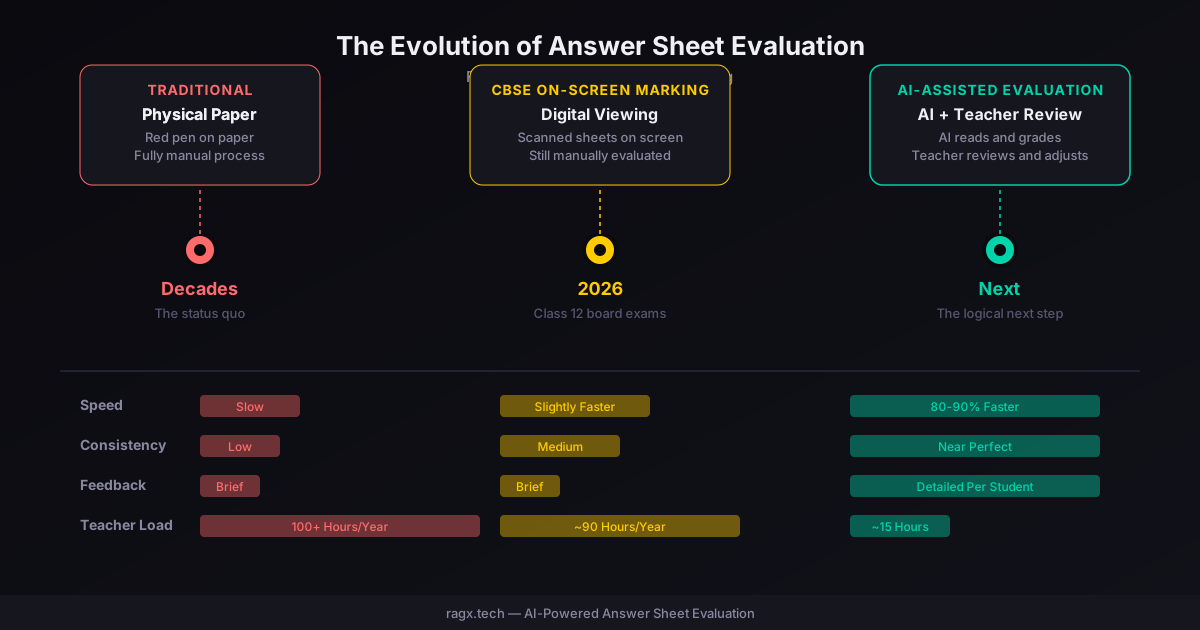
Third, CBSE has introduced On-Screen Marking for Class 12 board exams in 2026. The board is actively digitising the evaluation process. This is the first step toward a future where technology plays a much larger role in how answer sheets are evaluated.
The direction is clear. The manual checking model that has run Indian education for decades is reaching its limits. The system needs to change. Not because teachers are failing. Because the system is asking them to do more than is humanly possible.
The question nobody is asking
Here is the thing about 150 million red pens.
Nobody decided that teachers should spend 1 billion hours on repetitive grading. It just happened. The exam system grew. Student numbers grew. Assessment frequency grew. And the only tool teachers had was a red pen and their own time.
The question is not "how do we make teachers check faster." They are already checking as fast as they can.
The question is: does every one of those 6 billion answer sheets need to be checked entirely by hand?
Some answers are straightforward. Right or wrong. Match against the marking scheme. Award marks. Move on. A significant portion of answer sheet checking is this kind of mechanical evaluation. It is repetitive, it is predictable, and it does not require the kind of judgment that only a human teacher can provide.
The parts that do require human judgment are exactly the parts that get shortchanged when teachers are exhausted from the mechanical work.
What if the mechanical parts were handled differently? What if the 1 billion hours could be cut to 100 million hours? What would teachers do with the other 900 million hours?
That is a question worth asking.
This page exists because teachers deserve better tools. Follow Saraswati AI on LinkedIn to be part of the conversation.